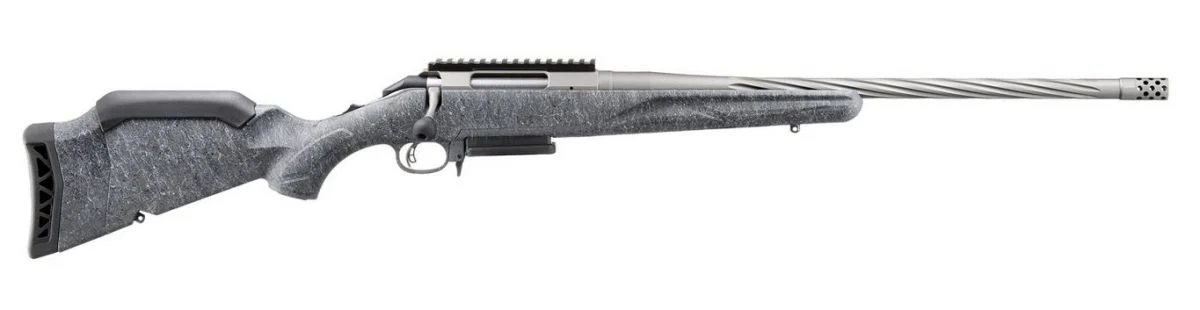
Hunting Rifles for Utah Deer and Elk: Calibers and What to Look For
Utah deer and elk hunts take place in mountains, sagebrush and aspen stands, and the rifle you carry matters as much on the climb as it does at the shot. This guide covers the calibers hunters usually choose for mule deer and elk, the main action types, optics, barrel length and the weight you can carry through steep country. Use the catalog links to compare models as you read.
Calibers that suit mule deer and elk
The 6.5 Creedmoor is a common starting point. Its recoil is mild, so most shooters place their shots more consistently, and its bullets keep a flat path at typical field distances. It fits mule deer well and handles elk when you pick a heavy-for-caliber bullet and stay within your practiced range. Browse 6.5 Creedmoor rifles.
The .270 Win has a long record on deer and elk. It is flat shooting and easy to find in factory loads. Its recoil is moderate, which suits hunters who spend a full day behind the scope.
The .30-06 is one of the most versatile hunting cartridges. Factory loads come in many bullet weights, so you can match the load to mule deer or elk. It is a practical choice for hunters who want one rifle for both animals. See .30-06 rifles.
The .300 Win Mag suits longer shots across open country. It hits harder and kicks more, and most hunters who choose it practice enough to stay steady with it. Expect more recoil than the three calibers above. See .300 Win Mag rifles.
Bolt-action or lever-action
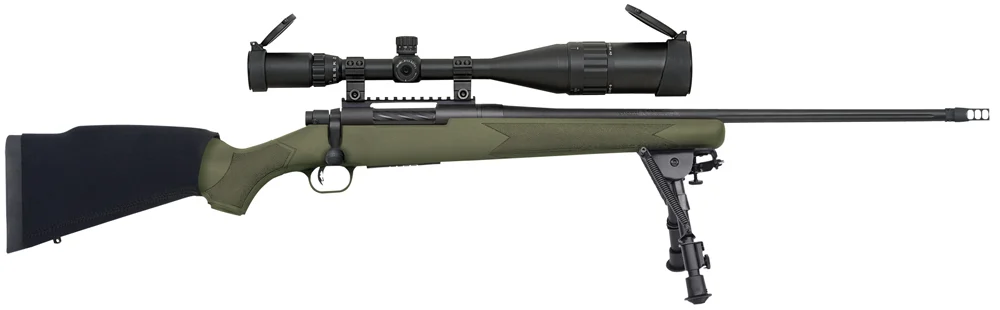
A bolt-action is the usual choice for mule deer and elk in Utah. It offers strong accuracy, a wide range of calibers and the longer reach that open western country often calls for. Most bolt-action rifles also hold their zero well after a rough day on the mountain.
A lever-action is lighter and quicker to carry through timber and brush. It is a good match for shorter shots in thick cover. Its cartridges generally have less reach than the magnum and 6.5 class calibers, so choose it for close country and practice at the distances you expect to hunt.
Barrel length and carry weight
A barrel of about 20 to 24 inches is a common range for mountain rifles. It keeps the rifle handy in the timber and still gives the powder enough room to perform. Shorter barrels save weight and length, while longer barrels add a little velocity.
Weight matters more than most hunters expect. A rifle that feels fine at the counter can feel heavy after several miles of climbing with a pack, water and optics. Many hunters set a limit before they buy, then check the total weight of the rifle, scope and sling together.
Optics
A variable scope in the 3-9x or 4-12x range covers the shots most Utah hunters take. Use the lower power for close timber and the higher power for distant ridges. Choose rings and mounts that match the rifle and the scope tube, and check the eye relief before you mount it.
Practice from a pack or a bipod as well as from a bench. Most shots at mule deer and elk in the mountains are taken from a rest, a kneeling position or a tree, not from a standing shooting stance.
What to check before you buy
- The caliber suits the game you hunt and the distances you expect to shoot.
- You can carry the rifle, scope and pack together for a full day.
- The action type matches your hunting style, whether timber or open country.
- The scope rings and mounts fit the rifle and the scope tube.
- The ammunition you plan to use is legal for your unit, as listed in the Big Game Field Regulations Guidebook.
- You have a sling that carries the rifle comfortably over long distances.
Utah hunting dates for 2026
The Division of Wildlife Resources sets the general-season dates for the state, and the state is split into deer units. For 2026 the general-season buck deer archery hunt opens August 15. The muzzleloader hunt runs September 23 to October 1, and the any legal weapon hunt runs October 17 to 25.
General bull elk any-weapon hunts run October 3 to 9 and October 10 to 16. The spike-only hunt runs October 3 to 15, and the muzzleloader hunt runs October 28 to November 5. Permits come through the spring big-game draw, where bonus points improve your chances.
Check the current Big Game Field Regulations Guidebook for unit boundaries and legal ammunition before you plan a trip.
Buying a rifle in Utah
Utah has no permit to purchase, no firearm registration and no state waiting period. At a licensed dealer you show photo identification, complete ATF Form 4473 and the dealer runs a background check. Utah is a point-of-contact state, so the check goes to the Utah Bureau of Criminal Identification along with the federal databases.
Federal law sets the dealer minimum age at 18 for rifles and shotguns and 21 for handguns. Orders placed online are shipped to a licensed dealer near you, and you pick that dealer at checkout. The dealer runs the background check and hands over the firearm.
Frequently asked questions
Which caliber should I start with for mule deer? A bolt-action in .270 Winchester, .308 Winchester, 6.5 Creedmoor or .30-06 covers Utah mule deer at the ranges most general-season units offer. Pair it with a 3-9x or 4-12x scope and practice off a pack.
Is a .300 Win Mag too much for elk? It is not too much for elk in open country, but it has more recoil than the other calibers in this guide. Choose it only if you will practice enough to shoot it well.
Do I need a permit to buy a rifle in Utah? No. Utah has no permit to purchase and no registration. You complete Form 4473 and pass a background check at the licensed dealer that receives your order.
How long does the purchase take in Utah? Utah has no state waiting period. Once the Bureau of Criminal Identification approves the background check, the dealer can release the firearm the same day.
General information, not legal advice. Current as of September 2026. Laws change; check the official source before you act.